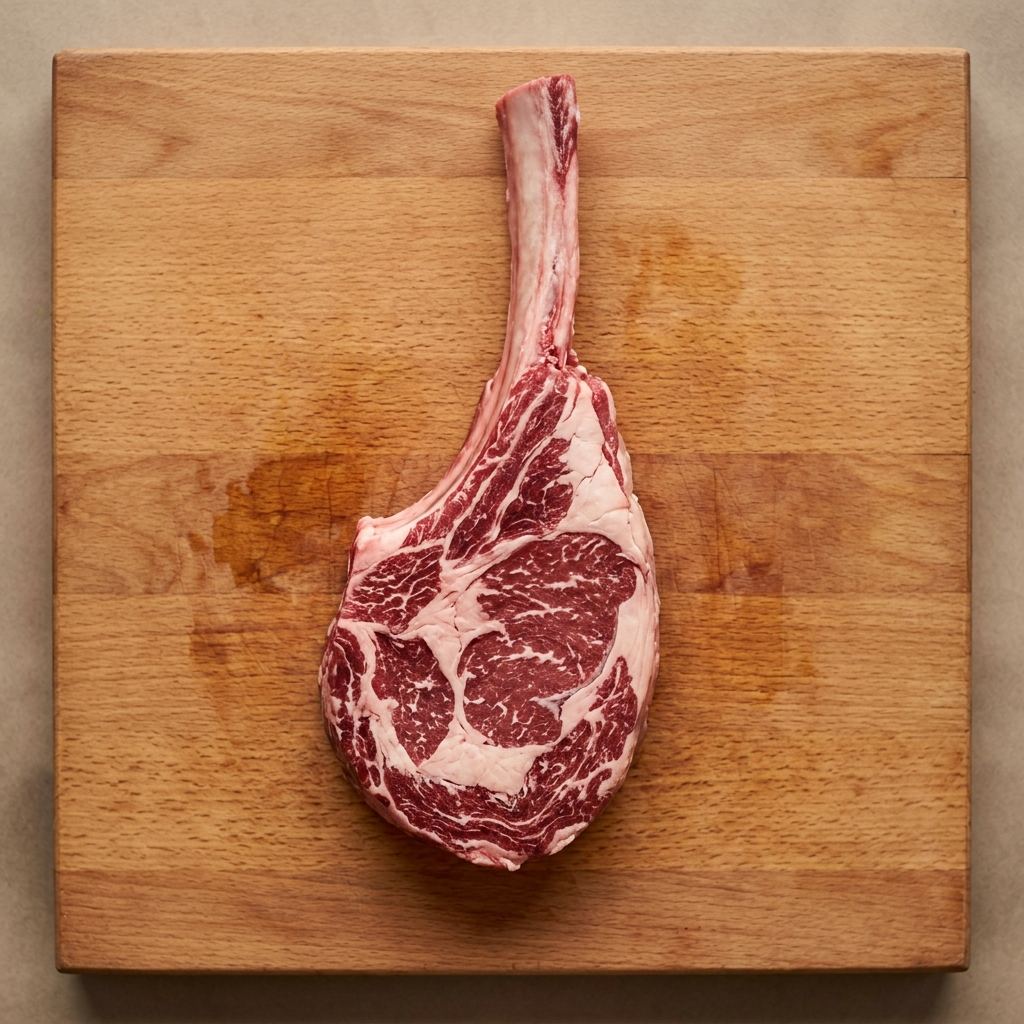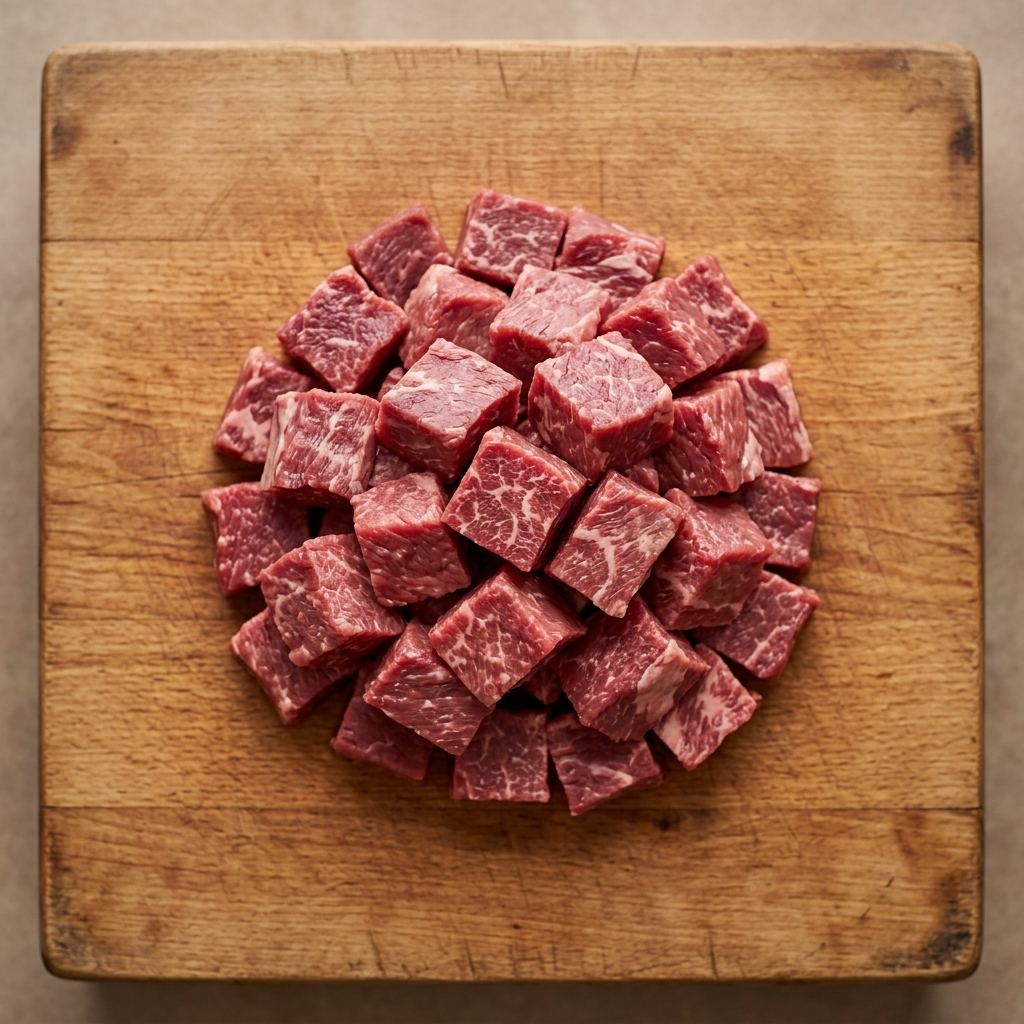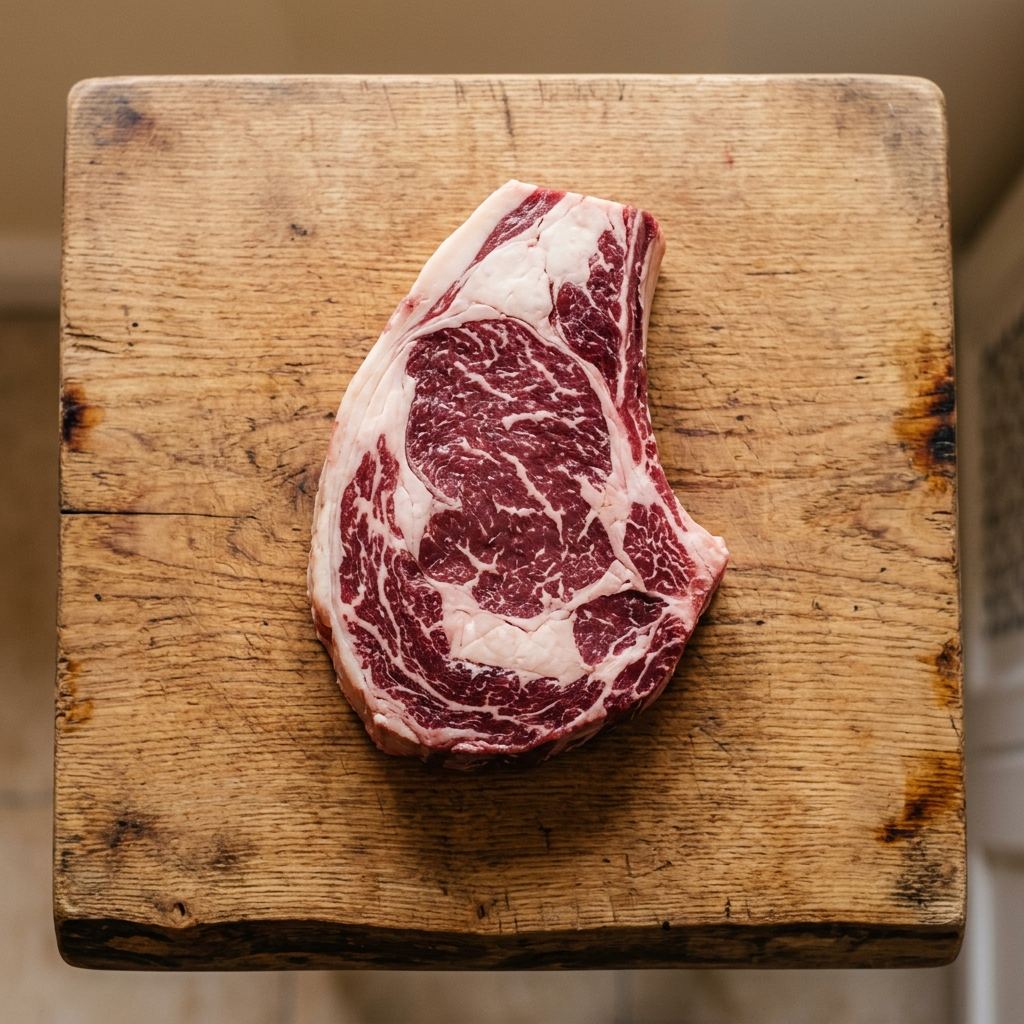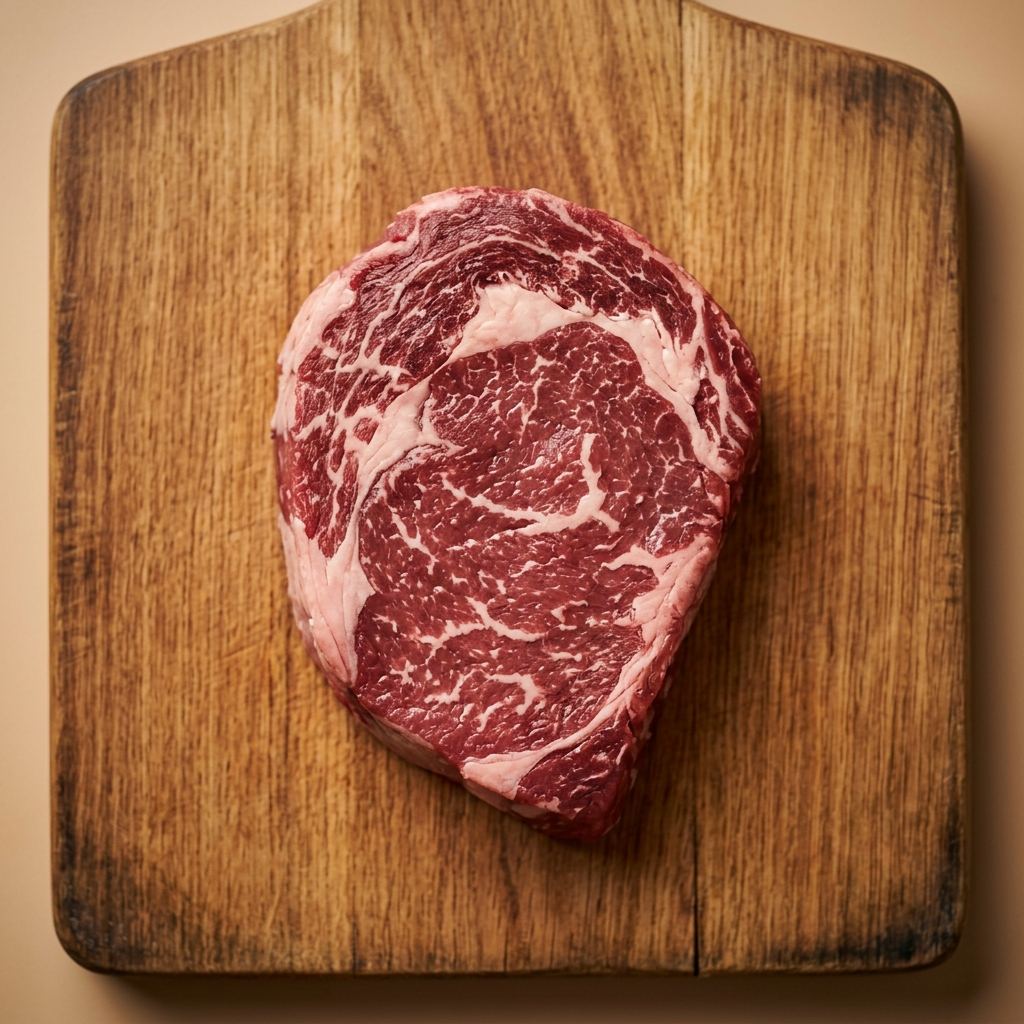
Ask ten Perth butchers what the best steak in the shop is and eight will point at the scotch fillet. Also known as ribeye in the US and Entrecôte in France, it's the boneless cut from the fore-rib of the beast — richly marbled, deeply beefy, and forgiving enough for a first-time cook to nail in twelve minutes flat.
At THE BUTCHER BOX, our scotch fillet is dry-aged for at least 14 days on premium grass-fed Australian beef, packed fresh Thursday and delivered Friday across Perth metro. Below is the exact process we use — and teach every subscription customer — to turn a raw slab into the best steak they've ever cooked at home.
What makes scotch fillet special
Three things separate scotch fillet from every other cut on the counter:
- Marbling. Thin veins of intramuscular fat that melt at ~35 °C, basting the steak from the inside as it cooks. Marbling is why a well-cooked ribeye tastes rich and moist without any added fat.
- The "eye" of the ribeye. The central round-of-muscle called the longissimus dorsi — the same muscle that becomes striploin further back. Buttery-tender because it does almost no work in the living animal.
- The cap. Spinalis dorsi, the crescent-shaped strip that wraps the eye. Widely considered the single best-tasting muscle on the entire animal. If you have to fight your family for it — mission accomplished.
For Perth cooks used to supermarket beef, the difference is immediate: a properly-aged scotch fillet from a real butcher smells like a steakhouse before it hits the pan. That's the enzymes doing their job.
Picking the right cut
Our default portion is 250 g per steak, roughly 2.5 cm thick — the sweet spot for a screaming-hot sear that still gives you a proper medium-rare interior. Anything thinner and the steak overcooks before the crust forms; anything thicker and you'll need to reverse-sear (more on that below).
Look for:
- Even white marbling, not big pockets of fat.
- A creamy off-white fat cap, not yellow or grey.
- Firm, springy meat that bounces back when pressed — not soft or watery.
If you're building your own box on our site, add 2 x scotch fillet 250 g for date-night; 4 x for a family Friday cook-up. The scotch fillet is a hero cut on the Grill Master's Box and the Carnivore Collection.
Step 1 — Take it out of the fridge
Forty-five minutes on the bench before cooking. A cold-centre steak is a disaster: it burns on the outside before the middle warms up. Room-temperature meat cooks evenly.
Pat the surface completely dry with paper towel. Water is the enemy of a crust — moisture on the surface boils, cooling the pan and preventing the Maillard reaction that gives you that dark brown steakhouse crust.
Step 2 — Season generously
Two options, both correct:
- Just salt — flaky sea salt, 3 minutes before hitting the heat. Simple, clean, lets the beef speak.
- Salt + coarse black pepper + a whisper of garlic granules — our house rub. Applied as you take the steak off the bench.
Do NOT season more than 30 minutes ahead unless you're doing a proper 12–24 hour dry brine (which is fantastic but requires overnight planning). In the 3–30 minute window, salt draws moisture to the surface without giving it time to be reabsorbed — you'll get a wet steak that steams instead of sears. Get in and out fast.
Step 3 — Get the pan properly hot
This is where most home cooks fail. The pan needs to be rippingly hot — smoke rising, oil shimmering.
- Cast iron or a heavy stainless steel pan. Non-stick can't take the heat.
- Heat the pan dry on the hob for 3 minutes, then add a tablespoon of high-smoke-point oil — rice bran, canola, or grapeseed. NOT extra-virgin olive oil (it burns at 190 °C).
- The oil should shimmer and just start to smoke. That's your cue.
If you're doing this on the Weber, get the coals white-hot and set up a two-zone fire: full flame directly under one side of the grate, empty coals under the other. You'll sear over the hot side and rest over the cool side.
Step 4 — Sear
Lay the steak away from you (never towards — it'll flick oil back at your hand). Now the golden rule: don't touch it.
- 90 seconds each side for 2.5 cm steaks, medium-rare target.
- Use tongs — never a fork (piercing the meat drains juice).
- Halfway through the second side, tilt the pan and spoon the fat over the surface (French: arroser). This bastes the top and starts the interior cooking evenly.
The "cap on the pan" trick — the fat cap along the edge of the steak needs its own moment. Stand the steak up on the fat edge for 30 seconds using tongs. That renders it into buttery gold that you'll want to sop up with sourdough.
Step 5 — Finish with butter, garlic and thyme
Off the heat. Drop in a generous knob of butter, a bruised garlic clove, and 2–3 sprigs of fresh thyme. As it foams, tilt the pan and baste the steak 8–10 times for the final minute.
This is where the "restaurant flavour" comes from. Every good steakhouse in Perth is doing exactly this in the final 60 seconds.
Step 6 — Rest. Really rest.
This is the step most home cooks skip. Do not skip it.
Move the steak to a warm plate. Cover loosely with foil. Wait 8 minutes for a 250 g steak, 10 minutes for a 350 g steak.
Here's what's happening: during cooking, the muscle fibres contract and squeeze all the juice towards the cool centre. Resting lets those fibres relax and the juice redistribute back through the meat. Cut too early and you'll get a pool of blood on the plate and a dry steak in your mouth. Rest properly and the juice stays inside — you'll get a moist, glossy interior with no puddle.
A rested steak is 20% moister than one served immediately. This is the single biggest lever between a good home cook and a great one.
Step 7 — Slice against the grain
Look at the surface — you'll see long muscle fibres running one direction. Slice perpendicular to them, about 1 cm thick. Slicing against the grain shortens the fibres in each mouthful, making the steak dramatically more tender. Same steak, half the chew.
Doneness cheat-sheet (internal temp)
Use a probe thermometer. Fingers-on-meat is guesswork. Your finger-check accuracy is 60%. A $30 thermometer's accuracy is 100%.
| Doneness | Pull temp | Final temp after rest |
|---|---|---|
| Rare | 48 °C | 52 °C |
| Medium-rare (recommended) | 52 °C | 56 °C |
| Medium | 57 °C | 61 °C |
| Medium-well | 63 °C | 67 °C |
| Well done | 70 °C | 74 °C |
Pull the steak off the heat at 4 °C below your target — carry-over cooking during the rest will finish it perfectly.
The reverse-sear method (for thick steaks)
If you've got a beast of a scotch fillet — 4 cm+ thick, 400 g+ (looking at you, tomahawk lovers) — the pan-sear method won't work. The outside will be charcoal before the inside is warm.
Instead, use reverse-sear:
- Oven at 90 °C. Season and place the steak on a wire rack over a tray.
- Slow-cook to 45 °C internal temp — about 40–50 minutes.
- Pull, let it rest 5 minutes.
- Sear in a rippingly hot pan or on the BBQ — 60 seconds each side, just to build the crust.
- Rest 5 minutes, slice, serve.
The result is edge-to-edge medium-rare with a killer crust. Zero grey band. This is how steakhouses do it.
Common mistakes to avoid
- Cooking cold steak. Fixed in Step 1.
- Cold pan. Fixed in Step 3. If the steak doesn't sizzle loudly when it hits the metal, the pan wasn't hot enough.
- Poking, flipping, moving. Every touch drops the crust by a percentage point. One flip. One rest. That's it.
- Skipping the rest. Non-negotiable.
- Cutting into a steak to "check doneness". Use a thermometer. Cutting drains all the juice into the plate.
- Salting a wet steak. Pat dry first.
Pairing
At the butchery we say: let the steak do the talking. Keep sides simple.
- Roasted garlic mash — potato, cream, roasted garlic, sea salt.
- Green salad with sherry vinaigrette — the acidity cuts the fat.
- Chargrilled asparagus dressed with lemon and parmesan.
- A bold Margaret River cabernet or shiraz — Perth's own back yard produces some of the best steak wines in the world. A Cape Mentelle Cabernet Sauvignon is a hero pairing.
The Butcher Box customer trick
Because we deliver Friday, our regulars use scotch fillet as the anchor of a "Saturday Steakhouse Night". Twelve minutes of active cooking, 8 minutes of rest, sit down 20 minutes after you fire the pan. Bottle open. Kids fed. Life is good.
If you'd like restaurant-quality scotch fillet — properly aged, expertly cut, packed fresh — add 2 x scotch fillet steaks to your Build-Your-Own box or grab the Grill Master's Box. Free delivery across Perth metro every Friday, minimum order $120, subscribe and save 5%.
Nail this method once and you'll never book a steakhouse again.