Wagyu ribeye is the single most rewarding — and most punishing — steak in a home cook's fridge. Get it right and you have a plate that eats better than 95% of Perth restaurants. Get it wrong and you've just melted $60 of some of the world's most highly-marbled beef into your rangehood filter.
At THE BUTCHER BOX, we deliver Australian Wagyu ribeye across Perth every Friday, packed the day before at our Malaga butchery. Our full-blood and cross-bred Wagyu comes from Australian family farms grading at marble score 6 to 9 — the intramuscular fat is what makes Wagyu Wagyu, and it demands a completely different technique to a normal grass-fed steak. This is the exact playbook we hand every new Wagyu subscriber.
Why Wagyu is different — and why standard steak advice will ruin it
Standard steak advice — "screaming-hot pan, sear it for two minutes each side" — is Wagyu-fatal. Here's why:
- Marbling melts at ~35 °C. A Wagyu ribeye is 30-45% intramuscular fat. On a screaming-hot pan, that fat renders in seconds, pools out of the steak, and takes all the flavour and moisture with it. What's left is a chewy, oddly-lean piece of beef with a scorched crust.
- The beefy flavour is subtle. Wagyu is not the aggressive, dry-aged, coppery-tasting beef that a scotch fillet delivers. It's cleaner, sweeter, buttery. Over-charring destroys the flavour balance.
- The portion is smaller by design. A 200 g Wagyu ribeye eats like a 350 g grass-fed steak because of the richness. Don't cook it in slabs.
Cook Wagyu the way you'd cook Wagyu — not the way you'd cook a $22 supermarket porterhouse.
Picking the cut
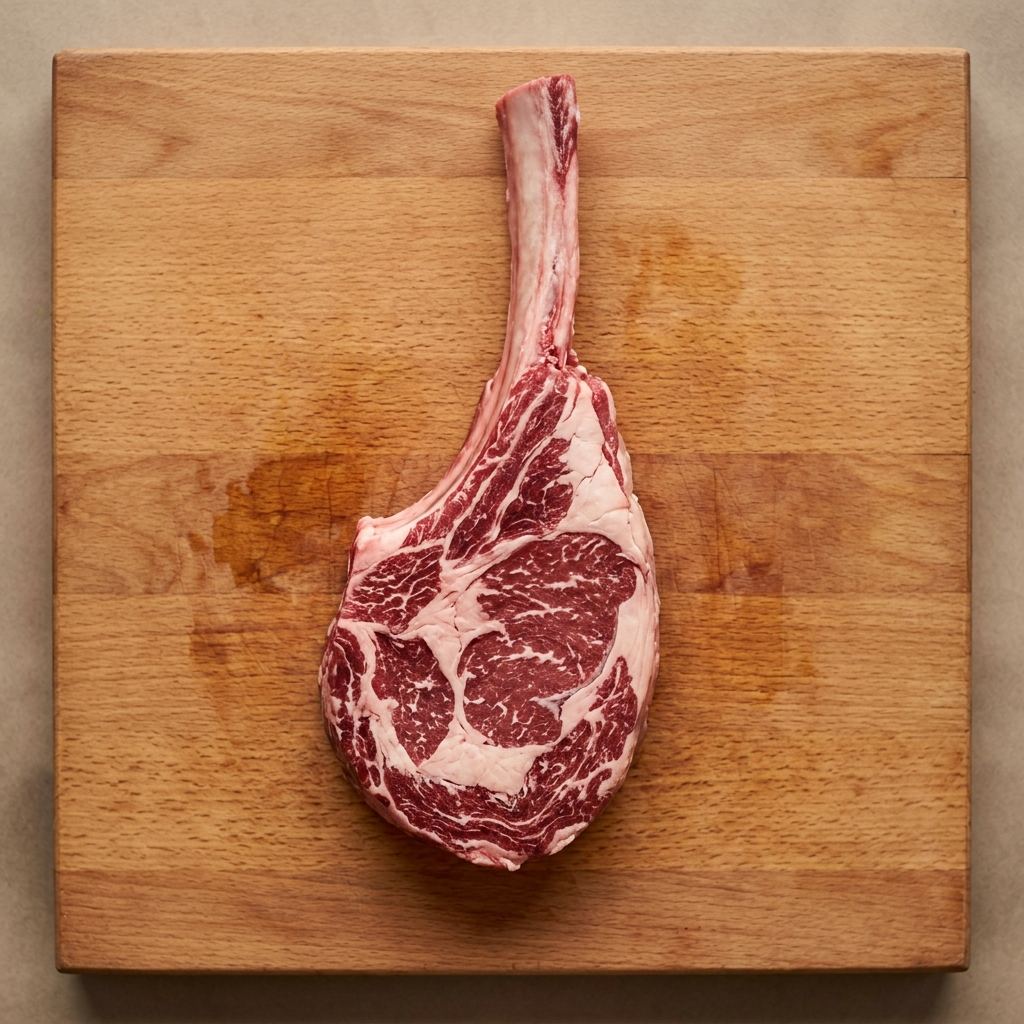
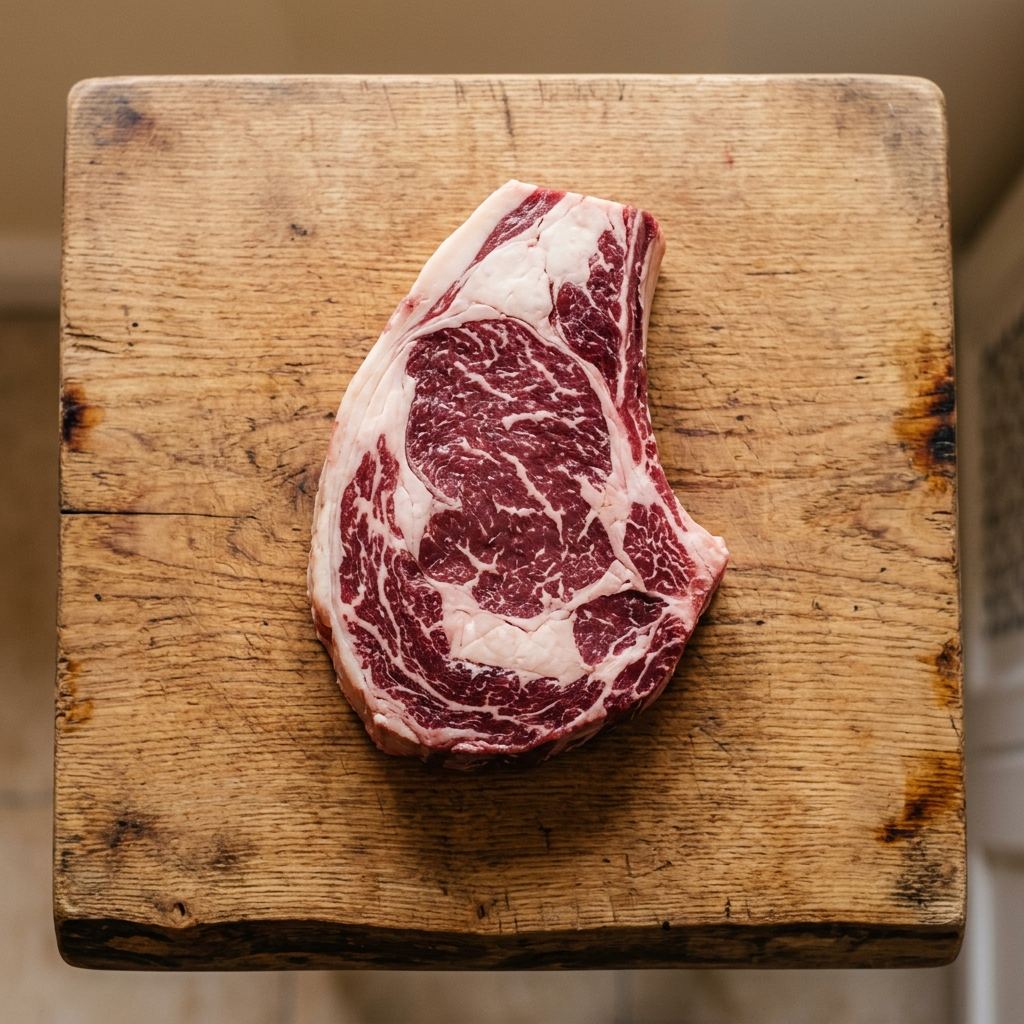
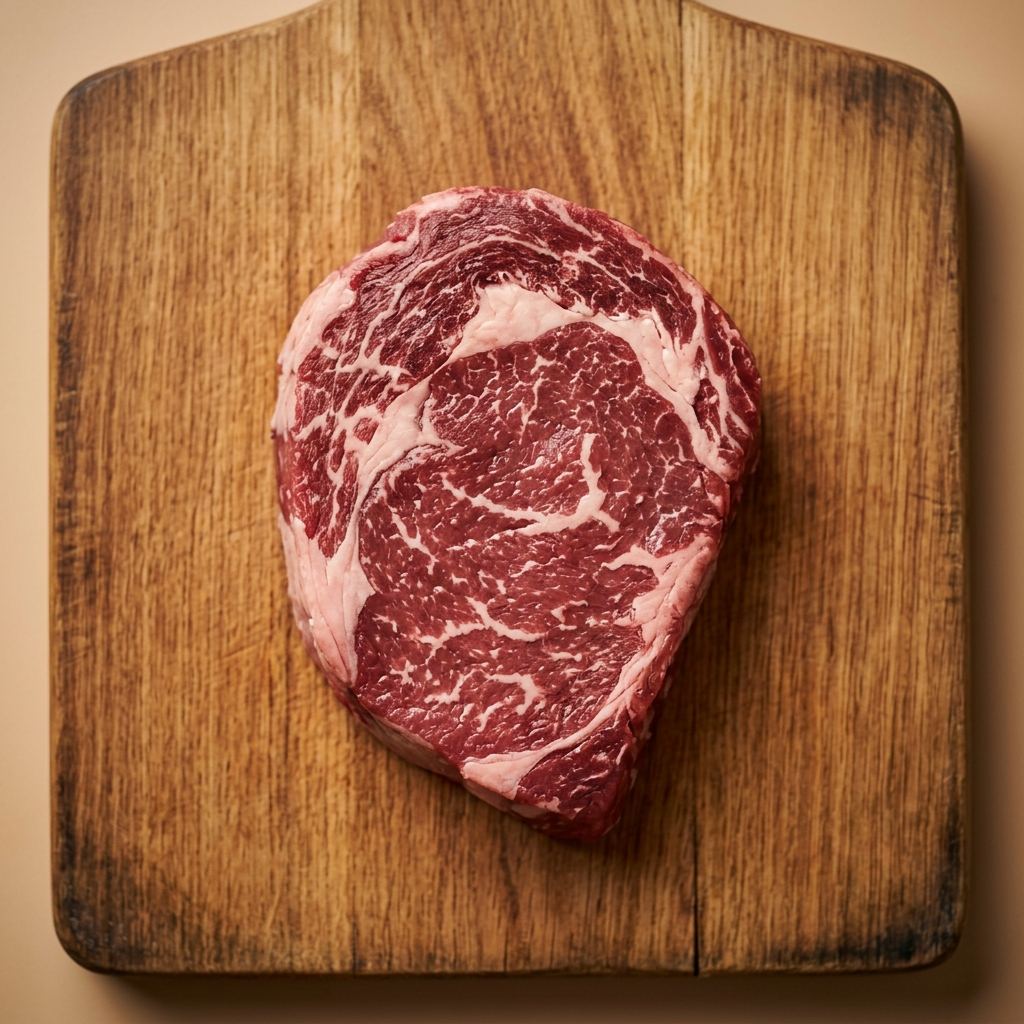
We portion our Wagyu ribeye at 180-200 g per steak, roughly 2 cm thick. This is deliberately thinner than our standard scotch fillet — you want the entire steak to reach medium-rare almost simultaneously, without a big raw core hiding behind a rendered crust.
Ideal Wagyu ribeye looks like:
- A spider-web of fine white marbling, not a few big pockets of fat.
- A soft, almost buttery texture when you press it — Wagyu is dramatically softer than grass-fed at the same temperature.
- A creamy-white fat cap, sometimes with a faint pink tinge from the marbling.
If you're building your own box on our site, 2 x Wagyu ribeye is a date-night portion; 4 x is a small dinner party where each guest gets one. Wagyu ribeye is a hero cut on our Grill Master's Box and available à la carte in the beef category.
Step 1 — Bench, then dry
30 minutes on the bench before you cook. Wagyu at fridge-cold seizes on the pan and the fat won't render evenly. Warm the meat to just below room temperature.
Pat both sides completely dry with paper towel. Water is the enemy of a proper crust. Wet meat steams instead of searing, and the Maillard reaction (the flavour-and-colour chemistry that makes a crust taste like a crust) refuses to happen below about 140 °C.
Step 2 — Salt only, and only just before
Fine sea salt on both sides, five minutes before it hits the pan — no earlier. Salt draws moisture out. Left on a steak for 45 minutes, that moisture pools on the surface and interferes with the crust. Left on for five, the salt is absorbed and helps the crust form.
No pepper yet. Wagyu's marbling makes cracked pepper taste harsh, and pepper burns above 200 °C. Add it after cooking, at the plate.
Step 3 — The pan matters more than the fire
Use a heavy cast-iron skillet or carbon-steel pan on medium-high heat, not the raging-hot pan you'd use for a standard steak. Cast iron holds heat evenly and won't spike when the meat hits.
No oil in the pan. Wagyu ribeye contains enough fat to grease itself. Add oil and you're deep-frying, not searing — and the extra oil pools around the steak, dropping the pan temperature and killing your crust.
Test the pan with a droplet of water: it should skitter and evaporate in 2-3 seconds, not vanish in a fraction of a second. That's the sweet spot.
Step 4 — Sear, but not for long
Lay the steak away from you (never toward you — hot fat splashes). Two to three minutes on the first side, undisturbed. Do not touch, do not press, do not lift and peek. Just wait.
Flip once with tongs (never a fork). Two minutes on the second side. That's it — five to six minutes total for a 2 cm steak.
Halfway through the second side, add:
- One knob of unsalted butter
- A crushed clove of garlic
- A sprig of fresh thyme or rosemary
Tilt the pan, spoon the foaming butter over the steak for the last 60 seconds. This is called basting, and it's where the aroma of a proper steakhouse actually lives. The garlic and herbs perfume the fat without over-flavouring the meat.
Step 5 — Rest, then rest more
Pull the steak onto a warm plate. Rest for as long as you cooked it — six minutes minimum. Loosely tent with foil to keep the surface warm.
Resting is not a suggestion. It's physics. The moment you slice into a Wagyu ribeye that hasn't rested, the rendered fat and juices spill onto the board instead of redistributing back into the muscle fibres. Ten minutes of impatience will cost you the moisture your $60 steak was supposed to deliver.
Step 6 — Slice against the grain
Look at the muscle striations running through the steak. Slice across them — perpendicular to the grain — in 1-cm ribbons. This shortens the fibre length in every bite, so the buttery softness of Wagyu registers on the palate before the chew does.
Season the sliced steak with cracked pepper and flaky sea salt (Maldon, Murray River or similar). This is the only salt-and-pepper moment. Add pepper at the plate, not the pan.
Serving — less is more
Wagyu ribeye is the star. Don't crowd the plate with heavy sides that fight for attention. Our recommended pairings:
- A pile of watercress dressed with lemon and olive oil — the peppery bitterness cuts the richness perfectly.
- Roasted marrow bones, if you're feeling special. Ask your butcher next time.
- A single glass of Margaret River cabernet, or a Yarra Valley pinot noir if you're feeling brave.
Do not serve with mash, chips or a sauce Bordelaise. Wagyu ribeye is not a bistro steak. It's a religious experience with a $60 ticket, and it doesn't need dressing up.
Common Wagyu-cooking mistakes
- Cooking past medium-rare. Beyond 55 °C internal, the marbling fully renders and the meat toughens. There is no "well done Wagyu" — that's a $60 leather sole.
- Using olive oil in the pan. Olive oil's smoke point (~190 °C) is below sear temperature. You'll get bitter, burnt oil in your crust. Never oil the pan for Wagyu.
- Slicing before resting. See above. The single biggest home-cook mistake.
- Serving on a cold plate. The steak loses temperature in seconds. Warm your plates in a low oven while the steak rests.
Storing leftover Wagyu
If you have leftovers (rare, but it happens with a Grill Master's-sized box), slice the meat cold within 24 hours and use it in cold applications — a Wagyu roast beef sandwich on sourdough with horseradish and rocket, or a Wagyu tataki-style salad with soy, sesame and yuzu. Do not reheat Wagyu. Reheating renders the last of the fat and you're left with a chewy, greasy shadow of the original.
Ready to try it?
Every Friday, we deliver Wagyu ribeye across Perth metro. Our full-blood and cross-bred Wagyu is vacuum-sealed and labelled at our Malaga butchery, then packed into an insulated carton with reusable cold packs so it arrives refrigerator-cold to your door — even if you're at work when we drop.
Add a Wagyu ribeye to your box this week, or subscribe to the Grill Master's Box for a rotating monthly delivery of premium cuts including Wagyu. Subscribers save 5% on every order and receive a complimentary pack of Wagyu Beef Burgers with every delivery.
If you're new to Wagyu, order two steaks first — try the technique above, then decide whether to graduate to the four-steak dinner party. Cancel or pause anytime.
A perfectly-cooked Wagyu ribeye is 40% ingredient quality, 40% technique, and 20% patience. We handle the first one. This guide handles the second. The third is up to you.